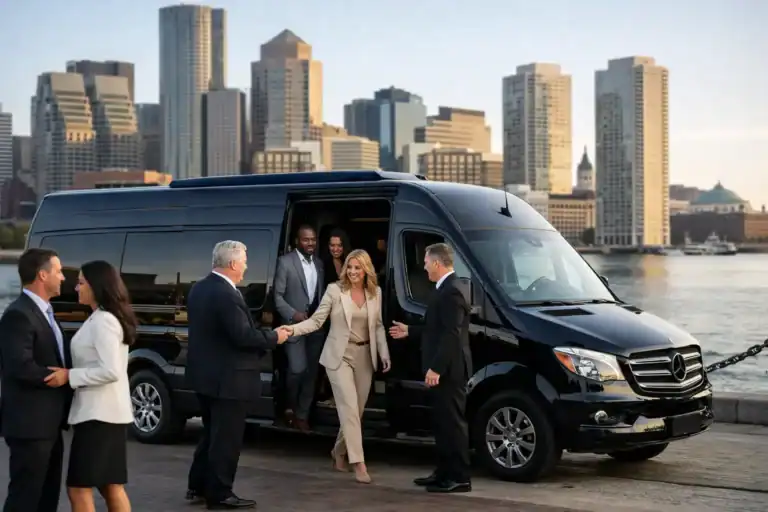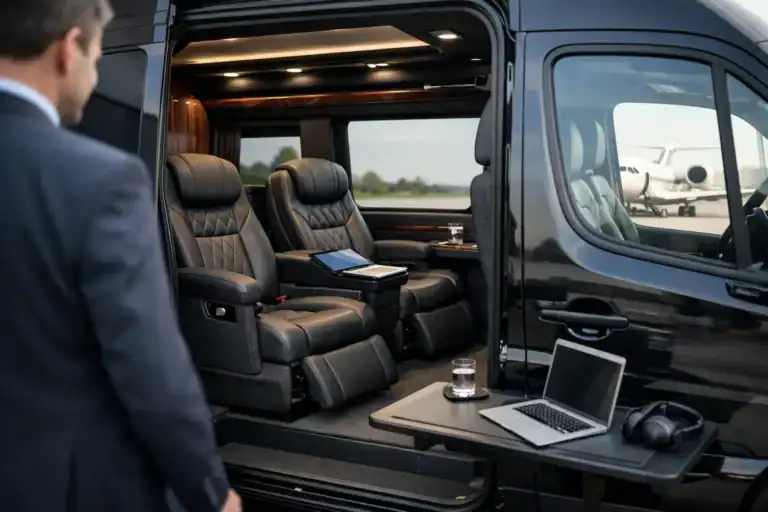

A missed pickup can cost more than a flight or a meeting. It can leave a senior executive waiting outside Logan Airport, delay a client presentation, or create an avoidable first impression at a private event. This executive transportation planning guide is designed for travelers, executive assistants, office managers, and hosts who need each detail handled with professional precision.
Premium transportation is not simply about selecting a luxury vehicle. It is about building a reliable plan around schedules, flight activity, traffic patterns, passenger needs, luggage, privacy, and the expectations attached to the trip. The right arrangement creates a calm, controlled experience from curb to curb.
Start With the Purpose of the Trip
Transportation decisions should begin with the occasion, not the vehicle. An airport transfer for one executive has different requirements than a multi-stop roadshow, a board dinner, or a wedding departure. Establish the mission of the trip first, then match the service level and vehicle to it.
For airport service, the priority is usually timing, flight monitoring, and a clear meeting plan. For corporate travel, discretion, a quiet cabin, and dependable routing may matter more. For events, group coordination and staging space can become the deciding factors. Long-distance city-to-city travel requires comfort, planned rest stops, and a chauffeur who understands the full itinerary rather than only the first pickup address.
Before reserving, confirm the pickup location, final destination, requested arrival time, number of passengers, and amount of luggage. If the passenger is traveling internationally, account for immigration, baggage claim, and customs. A flight may land on time while the passenger is still 30 to 45 minutes away from the terminal curb.
Build the Schedule Backward
A polished transportation plan is built from the required arrival time backward. This approach leaves room for traffic, terminal logistics, building access, and the unexpected delays that can affect Boston travel.
For an airport departure, begin with the airline’s recommended check-in time, then add the drive time from the pickup location to Logan Airport. Include a meaningful buffer for rush hour, weather, road construction, and terminal congestion. A 6:00 a.m. flight may require an earlier pickup than expected, particularly when travelers need checked baggage or international check-in.
For meetings, consider when the passenger needs to be inside the building, not merely at the address. Large offices, hotels, convention venues, and private clubs can require security check-in, elevator time, or a walk from the drop-off point. Plan to arrive 10 to 15 minutes before the meeting when the occasion carries professional importance.
Airport arrivals benefit from real-time flight monitoring rather than fixed assumptions. A professionally managed reservation should adjust for an early arrival, delay, or gate change when possible. Meet-and-greet service is especially valuable for first-time visitors, international guests, elderly family members, and executives arriving after a long flight. It removes the uncertainty of locating a vehicle in a busy airport environment.
Choose the Vehicle for the Actual Assignment
Vehicle selection should reflect passenger count, luggage volume, presentation, and the length of the trip. Booking a vehicle that is technically large enough is not always the same as booking one that is comfortable enough.
A business-class sedan is well suited to one or two passengers with standard luggage. It offers a discreet, refined option for airport transfers, client dinners, and individual executive travel. An executive SUV provides more cabin space and luggage capacity, making it a strong choice for families, small teams, or travelers carrying multiple bags.
For VIP transportation, an immaculate Cadillac Escalade creates a more commanding arrival while maintaining practical space for passengers and luggage. Executive vans are the better solution for groups that need to travel together, such as visiting teams, wedding parties, conference attendees, or families. Keeping a group in one vehicle simplifies communication and prevents staggered arrivals.
Stretch limousines have a distinct place in wedding transportation, milestone celebrations, and formal events where the vehicle is part of the experience. For a business itinerary, however, a sedan or SUV often presents a more understated image. The best choice depends on the setting and the passenger’s preferences.
Confirm Airport Details Before the Travel Date
Logan Airport reservations deserve more detail than a standard point-to-point booking. Provide the airline, flight number, arrival date, passenger name, phone number, and the anticipated amount of checked luggage. This information allows dispatch and the chauffeur to prepare for the correct terminal and follow flight activity.
For departures, verify the airline terminal before the day of travel. Airlines and terminal procedures can change, and terminal traffic differs substantially throughout the day. For arrivals, decide whether the traveler prefers curbside pickup or a meet-and-greet inside the terminal. Curbside service can be efficient for travelers who know Logan well and can move quickly. Meet-and-greet service offers greater assistance and clarity, particularly after a delayed flight or when a guest is unfamiliar with Boston.
It is also wise to share a backup contact. Executive travelers may be in the air, in a meeting, or unavailable when a question arises. An assistant, host, or family member can help resolve a last-minute detail without disrupting the itinerary.
Plan for Boston Traffic, Not Ideal Conditions
Boston’s streets reward realistic planning. The route that looks shortest on a map may not be the fastest at rush hour, during a major event, or when weather affects local roads. Downtown congestion, tunnel traffic, Fenway activity, convention schedules, and seasonal travel can all change the timing of a ride.
When an arrival time is non-negotiable, reserve the vehicle for a pickup window that includes a proper cushion. This is particularly relevant for early-morning airport travel, weekday meetings in the Financial District, and evening events in Back Bay, Seaport, or Cambridge. A few extra minutes in the schedule cost far less than arriving rushed.
For multi-stop itineraries, list each stop in its intended order and include the expected duration at each location. A chauffeur can then plan practical routing and remain positioned for the next departure. Hourly chauffeur service is often the better fit when timing between stops may change, when the traveler needs the vehicle nearby, or when an event has an uncertain end time.
Set Expectations for Service and Communication
Luxury transportation should feel easy because the details have been addressed before the pickup. Confirm the chauffeur’s arrival procedure, the passenger’s preferred contact method, and how updates will be communicated. Some travelers prefer a text upon arrival; others prefer their assistant to receive all notices.
Professional chauffeurs should arrive early, maintain a polished appearance, assist with luggage, and respect passenger privacy. For executive travel, the vehicle should be clean, quiet, and properly prepared before the passenger enters. These standards matter just as much as the route.
Pricing also deserves clarity. Fixed-rate reservations provide a more controlled planning experience than variable on-demand pricing, particularly for airport service, corporate travel, and events with a defined itinerary. Ask what is included, whether wait time is provided, and how itinerary changes are handled. Transparent expectations prevent surprises after the ride is complete.
Reserve Early for High-Importance Travel
Advance reservations provide access to the right vehicle and allow time to review the details properly. This is especially important for early-morning airport departures, holiday weekends, large conventions, weddings, graduations, and high-profile events. Last-minute transportation can be available, but it limits vehicle choice and leaves less room for coordination.
For corporate travel, send the itinerary as soon as flights and meeting times are confirmed, then review it again 24 hours before service. For weddings and events, assign one transportation point of contact who can make decisions on the day. A single, informed contact prevents conflicting instructions from multiple guests or vendors.
Boston Luxury Chauffeur approaches each reservation as a logistical assignment, with professional chauffeurs, fixed pricing, flight monitoring, and 24/7 dispatch support designed around the traveler rather than a generic pickup window.
The most useful final step is simple: review the plan from the passenger’s perspective. Where will they meet the chauffeur? What happens if the flight is delayed? Is there enough space for every bag? When those answers are clear before travel day, the ride becomes what premium transportation should be: discreet, punctual, and entirely under control.