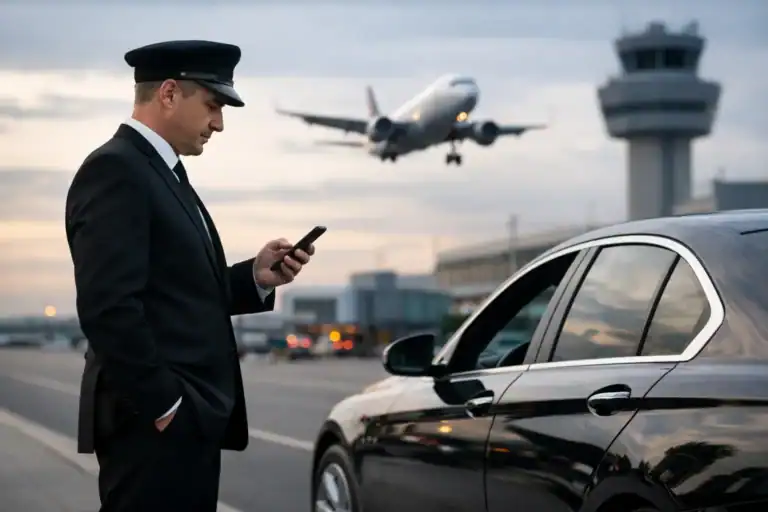

A chauffeur who arrives exactly at the scheduled pickup time may be technically on time, but that is not the standard most clients expect from premium private transportation. When the question is, “how early should chauffeur arrive,” the right answer depends on the service, location, and importance of the itinerary. For an executive headed to Logan Airport or a wedding party working to a fixed ceremony schedule, early arrival is part of the service itself.
A professional chauffeur service plans for the moments around the pickup, not simply the pickup time printed on an itinerary. That means accounting for traffic, vehicle positioning, building access, luggage, passenger readiness, and any unexpected delay before the vehicle begins moving.
How Early Should a Chauffeur Arrive?
For most scheduled private transportation, a chauffeur should arrive 10 to 15 minutes before the requested pickup time. This is the appropriate baseline for corporate travel, local point-to-point rides, dinners, and standard airport departures. It gives the chauffeur time to confirm the address, position the vehicle discreetly, and be ready when the client steps outside.
For more complex services, the arrival window should increase. A chauffeur assigned to a wedding, a large group, a major event, or a long-distance trip should generally arrive 15 to 30 minutes early. The goal is not to have guests waiting in the driveway. It is to create enough operational margin that the vehicle, chauffeur, and itinerary are fully prepared before the first passenger is ready.
Airport arrivals work differently. When collecting a passenger at Logan Airport, the chauffeur’s timing should be tied to the flight rather than the original reservation time alone. Flight tracking, actual landing time, gate changes, baggage claim, and terminal congestion all affect when a chauffeur should be in position. A meet-and-greet chauffeur may enter the terminal based on the passenger’s arrival progress, while curbside pickup requires careful coordination so the vehicle does not circle unnecessarily or arrive before the passenger is ready.
Why Early Arrival Matters in Luxury Transportation
Early arrival is not simply a courtesy. It protects the entire travel plan. A delayed vehicle can make a client late for a flight, meeting, ceremony, dinner reservation, or keynote presentation. Even when the destination is close, the stress of wondering whether a vehicle will appear changes the experience.
Premium chauffeur service also involves details that a basic ride may not. The chauffeur may need to help with luggage, adjust the vehicle temperature, confirm the destination or route, assist an elderly passenger, or accommodate a child seat or extra bags. These details take only a few minutes, but they should never feel rushed.
For corporate travelers, an early chauffeur supports professional presentation. An executive can leave a residence, hotel, or office knowing an immaculate sedan or executive SUV is waiting. There is no need to monitor an app, call a driver, or stand outside on a busy Boston street hoping the vehicle can stop safely.
Recommended Arrival Times by Service Type
Airport Departures
For a home, hotel, or office pickup heading to Logan Airport, 10 to 15 minutes early is typically ideal. The actual pickup time should already account for airport arrival recommendations, expected Boston traffic, weather, terminal access, and whether the traveler is checking luggage.
For international departures, early-morning flights, holiday travel, or a group traveling with substantial luggage, building in more time is prudent. The chauffeur may arrive 15 minutes ahead of schedule, while the booked pickup time itself should be set well before the airline’s recommended airport arrival window.
Airport Arrivals
A professional airport transfer should be managed through real-time flight monitoring rather than a fixed assumption about landing time. The chauffeur should be ready according to the flight’s actual progress and the passenger’s preferred pickup method.
For meet-and-greet service, the chauffeur typically meets the traveler after the flight arrives and the passenger has had time to clear the terminal process. For domestic arrivals with carry-on luggage, this may be relatively quick. International arrivals, checked bags, customs processing, and family travel can require significantly more flexibility. Complimentary wait time and 24/7 dispatch support matter because they allow the service to respond to the real arrival, not an outdated schedule.
Corporate Meetings and Business Travel
For a high-stakes meeting, investor presentation, roadshow, or client dinner, plan for the chauffeur to arrive 10 to 15 minutes early. If the pickup is at a large office building, hotel, convention center, or restricted-access campus, 15 to 20 minutes is better.
The additional time allows the chauffeur to locate the correct entrance, communicate with security or a concierge if necessary, and identify a legal, convenient waiting position. In downtown Boston, where curb space is limited and traffic patterns can shift quickly, this preparation is especially valuable.
Weddings and Formal Events
Weddings require the largest timing buffer. A chauffeur should generally arrive 20 to 30 minutes before the first scheduled departure, especially for limousines, executive vans, or multiple-vehicle transportation. The wedding party may need time for photographs, loading dresses or formalwear carefully, organizing personal items, and confirming the passenger count.
The itinerary should also account for different pickup locations and the possibility that the couple, family members, or vendors run behind schedule. Early vehicle arrival gives the coordinator options. Late vehicle arrival takes those options away.
Concerts, Sports, and Private Events
For a concert at TD Garden, a gala, a sporting event, or a private celebration, 15 to 20 minutes early is appropriate. Event traffic can create difficult pickup conditions both before and after the occasion. A chauffeur should know the preferred entrance, staging area, and post-event reunion plan before the passengers need the vehicle.
For return service, clients should not expect the chauffeur to pull up at the exact moment an arena empties. The better plan is a confirmed pickup location, a clear communication method, and enough patience to navigate event-related street closures and pedestrian traffic safely.
Factors That Change the Right Arrival Window
The recommended arrival time is a standard, not a rigid rule. Several practical factors may call for additional lead time.
Boston weather is one of the most obvious. Snow, freezing rain, heavy rain, and reduced visibility can affect both travel times and safe vehicle positioning. During winter conditions, an early chauffeur arrival provides a useful buffer before the client even enters the vehicle.
The pickup location matters as well. A private residence with a wide driveway is straightforward. A Back Bay hotel, Seaport office tower, hospital, university campus, or downtown condominium may involve valet coordination, loading zones, security desks, or limited curb access. In these settings, arriving early is necessary to avoid last-minute confusion.
Passenger needs should also shape the plan. Families with young children, travelers with mobility considerations, guests carrying golf clubs or multiple suitcases, and groups using an executive van often need more loading time. The right vehicle must be selected in advance, and the chauffeur needs enough time to prepare it for the group.
What Clients Should Do When a Chauffeur Arrives Early
An early chauffeur should not create pressure for the passenger to leave early. The vehicle is there to provide reassurance and readiness. Clients should depart at the scheduled pickup time unless they are ready to leave sooner.
For the smoothest experience, keep your phone available near pickup time, particularly at hotels, airports, event venues, and locations with restricted access. If you know the pickup point will change, you have additional luggage, or a meeting runs long, alert dispatch as soon as possible. A professional transportation team can adjust more effectively when it has timely information.
It is also helpful to provide precise reservation details from the start: the full address, preferred entrance, flight number, number of passengers, luggage estimate, and any special requests. These details allow the chauffeur to arrive prepared rather than merely early.
Early Arrival Is a Service Standard, Not an Extra
The difference between a ride and a premium chauffeur experience often appears before the door opens. A prepared chauffeur, a properly positioned vehicle, and a realistic timing plan remove uncertainty from an important day.
For airport travel, executive schedules, weddings, and special events, choose a service that treats early arrival as part of its operating standard. Boston Luxury Chauffeur plans each reservation around the real demands of the itinerary, so your vehicle is ready when the moment calls for it.